AI developer news, tools, and content
What is AICrier?
Live AI developer news, ranked and linked to original sources.
> ▌
TUESDAY // 2026-10-27
6 itemsOCT 27

PT36M26S
// WATCH
HUGE ANTHROPIC BOMBSHELL! Claude REA UNBANNED?! GPT-6.1 Terra, Qwen 4 27B, & Fable 5.5! AI NEWS
+7
WorldofAI

PT29M12S
// WATCH
GPT-6.1 Terra Is HERE – Is THIS the FASTEST Model Yet?
+2
Bijan Bowen
POLICY// 12m ago
OpenAI Codex Clarifies Reverse-Engineering Access
OpenAI clarified that additional cybersecurity checks or warnings do not automatically mean a policy violation, while authorized defensive research can apply for Daybreak access. The update addresses confusion around legitimate reverse-engineering workflows and Codex enforcement.
openai-codexcoding-agentai-codingsecuritysafetydevtool+6+5+4+3+2+1
NEWS// 12m ago
Qwen 4 27B Leak Teases Local Model
Community reports suggest Alibaba’s unreleased Qwen 4 27B may be referenced in inference-kernel work, including possible INT4, FP8, QSA, and multi-token-prediction support. No official model card, weights, license, benchmarks, or release date have been published.
qwen-4-27bllmopen-weightslocal-firstinferencequantization+6+5+4+3+2+1
UPDATE// 49m ago
T3 Code 0.1.3 brings nightly to stable
T3 Code 0.1.3 delivers a redesigned interface, two-click guest thread sharing, and an 85% reduction in data loaded when opening threads. The release brings the nightly channel’s major usability and performance work to stable.
t3-codeai-codingcoding-agentagentdevtoolopen-source+6+5+4+3+2+1
UPDATE// 1h ago
T3 Code Cuts Agent Tool Context 79%
T3 Code’s latest nightly reduces MCP tool context from 18.8k to 4.0k tokens with tool search enabled, while consolidating 84 tools into 66 and shrinking schemas by 34%. GitHub PR #25423 documents the change.
t3-codemcptool-usecontext-engineeringcoding-agentai-codingopen-source+7+6+5+4+3+2+1
MONDAY // 2026-10-26
18 itemsOCT 26

PT16M15S
// WATCH
OpenAI's New GPT-6.1 Terra Is WAY Better Than It Should Be (10x Cheaper, 3x Faster)
+7
AI Revolution

PT2M12S
// WATCH
Copilot Automations Run While You Sleep #ai #coding #githubcopilot
Burke Holland

PT2M25S
// WATCH
Claude Code Remote Control: Where Claude Runs and How to Really Turn It Off
+1
DIY Smart Code

PT35S
// WATCH
How Sullivan & Cromwell builds legal tools with Codex | OpenAI
+2
OpenAI

PT2M7S
// WATCH
Qwen Calling Home?
+4
Prompt Engineering

PT1M18S
// WATCH
Stop Making Your Whole Team Chase New AI Tools
Every

PT1M24S
// WATCH
Amp puts AI agents to work beyond code with OpenAI models
+1
OpenAI

PT1M14S
// WATCH
Stack Overflow for Agents triples signups with ChatGPT plugin
OpenAI

PT1M27S
// WATCH
Higgsfield takes AI video from 1 minute to over 10
+5
OpenAI

PT2M
// WATCH
Claude Code /skill-doctor: 64 Unused Skills Cost Under 1% of My Context
+1
DIY Smart Code

PT4M55S
// WATCH
Fix broken STT models with Context Biasing
+1
Mistral AI

PT14M8S
// WATCH
These NEW Hermes Agent Use Cases are INSANE (not what you think)
Rob The AI Guy

PT12M4S
// WATCH
I Turned AI Video Into a Playable Fighting Game
Eric Michaud

PT2M15S
// WATCH
Claude Code Desktop Can Archive Your Sessions Without Asking (Auto Mode)
DIY Smart Code

PT25M44S
// WATCH
Who Broke the World for AI?
+1
Discover AI

PT2M29S
// WATCH
This Chatbot Sat in an MIT Box for 50 Years #eliza #chatbot #ai
Better Stack

PT8M27S
// WATCH
SEO Isn't Dead, You're Doing It WRONG (Claude Code 8x'd My Traffic)
+1
Income stream surfers
PT1M2S
// WATCH
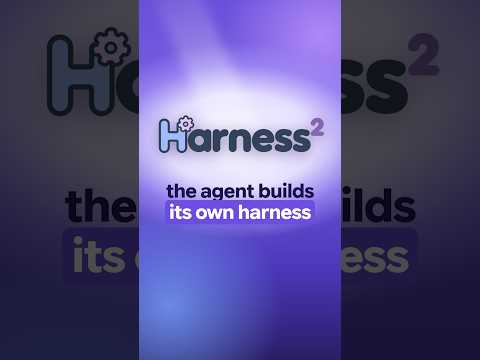
Harness² Explained in 60 Seconds
+1
Prompt Engineering